Introduction: The Nose of a Hero
On a small marine boat bobbing in the choppy waters of the Salish Sea, Collette Yee watched her partner’s nostrils. Not his eyes—his nostrils. She was looking for the subtle flare, the slight closing of the eyelids, the almost imperceptible tension in the leash that signaled he had caught the scent. Her partner, Jack, a former shelter dog with floppy ears and an obsession with tennis balls, wasn’t tracking a fugitive or searching for drugs. He was looking for something far more elusive: the floating, rapidly sinking “gooey booger” of killer whale scat .
It sounds absurd. It is, in fact, brilliant.
For decades, we have trained dogs to serve our needs—herding livestock, guarding homes, guiding the blind. But in the last 25 years, the role of Canis lupus familiaris in the laboratory and the field has undergone a radical transformation. Today, dogs are not just subjects of science; they are collaborators. They are conservationists, epidemiologists, and genetic pioneers.
This is the story of how dogs do their duty for science. It is a tale that spans from the atomic age to the genomics era, from the forests of Washington state to the laboratories decoding Parkinson’s disease. It covers the hyper-specialized noses of Labrador Retrievers hunting toxic weeds, the “Atomic Beagles” of the Cold War who redefined radiation safety, and the 3,000 Golden Retrievers who are eating, sleeping, and playing their way toward a cure for cancer.
Part I: The Equipment – Understanding the Canine Superpower
Before understanding what dogs do for science, we must understand how they do it. The answer lies in roughly 220 million scent receptors.
Humans navigate the world through vision; dogs navigate through olfaction. While a human possesses a respectable 5 million scent receptors, a Dachshund has about 125 million, and a Bloodhound—the Ferrari of sniffers—boasts upwards of 300 million. Their noses are so sensitive that they can detect concentrations of scent as low as one part per trillion. To put that in perspective, a dog could detect a single drop of blood in an Olympic-sized swimming pool .
Recent advances in high-throughput omics technologies—genomics, transcriptomics, and proteomics—have begun to unravel the genetic code behind this ability. Research published in Mammal Research in 2025 highlights that the dog’s olfactory prowess isn’t just about the real estate in their noses; it’s about the genetic diversity regulating olfactory receptors and neural circuits .
But genetics is only half the story. The true breakthrough in canine science over the past two decades has been a shift in methodology. Scientists have stopped trying to fight the dog’s nature and started harnessing it. Instead of forcing animals into sterile, unnatural lab environments, researchers are bringing the lab to the dogs. They are taking shelter dogs—often the ones deemed “unadoptable” because they are too hyperactive, too obsessive, too much for a quiet family home—and giving them a job .
This is the foundation of modern conservation detection. The dogs aren’t working despite their high energy; they are working because of it.
Part II: The Poop Detectives – Conservation Canines in Action
In 1997, Samuel Wasser, the director of the Center for Conservation Biology at the University of Washington, had a radical idea. He was studying stress hormones in wildlife, which required collecting large amounts of animal scat. The traditional method involved researchers walking transect lines, eyes glued to the ground, hoping to stumble upon feces. It was slow, expensive, and inefficient.
Wasser’s solution? Recruit dogs.
Today, the University of Washington’s Conservation Canines program is the gold standard for non-invasive wildlife research. The team consists of roughly 17 dogs, almost exclusively rescued from shelters. They are selected based on one criterion: an uncontrollable, obsessive drive to play ball. For these dogs, the scent of endangered animal feces isn’t a dirty job; it’s a treasure hunt where the reward is their favorite squeaky toy .
Whale Boogers and Orca Health
Perhaps no case better illustrates the exquisite specificity of these dogs than the story of Jack and the whales. Killer whales in the Pacific Northwest are endangered, threatened by pollution, lack of salmon, and noise disturbance. To understand their health, scientists need their hormones and microbiomes. But orcas are notoriously difficult to approach, and darting them for blood samples is invasive and stressful.
Enter the dogs.
As detailed in a March 2025 report by NPR, training a dog to find whale poop requires a phased approach. First, Jack was trained on land using frozen killer whale scat hidden in trees and on rocks. Then, the training moved to floating containers in the water. Finally, Jack and Collette hit the open water. The challenge was immense. Whale scat disintegrates within 10 minutes of hitting the water. The team had to track the whales’ movement, current, and wind simultaneously. When Jack finally locked onto the scent—his eyes half-closing, his nose pointing like a compass needle—he led the boat to a patch of floating specks. The whale biologist on board confirmed it: killer whale feces, collected without a single animal being touched .
This scat provides a wealth of data. It reveals pregnancy rates, stress levels (cortisol), toxin exposure, and DNA identity. It is, quite literally, a health report card for an entire species.
19 Times Faster Than Humans
The efficiency of these teams is staggering. In a study on koala detection, conservation dogs were found to be 19 times faster than human-only survey teams . They have sniffed out tiger scat in the dense jungles of Asia, located the minuscule droppings of caterpillar larvae (the size of poppy seeds), and tracked the scent of invasive European green crabs buried in mudflats .
Part III: The Atomic Beagles – A Somber History of Service
While the image of a smiling Labrador finding whale poop is heartwarming, the history of dogs in science is not without its shadows. To understand the ethics and evolution of canine research, we must look back to the mid-20th century—to the “Atomic Beagles.”
Historian Brad Bolman, a Member at the Institute for Advanced Study, has meticulously documented this era in his upcoming book, Lab Dog. During World War II and the subsequent Cold War, the Manhattan Project created a new problem: plutonium. Scientists knew it was dangerous, but they didn’t know how dangerous, or in what doses. They needed a biological proxy for humans .
Rats were too small. Pigs and goats were too foreign. They needed a standard dog.
After experimenting with various breeds, scientists settled on the Beagle. Medium-sized, docile, and incredibly popular in mid-century America, the Beagle became the “model organism” for radiation research. Large-scale facilities at the University of Utah, UC Davis, and the Argonne National Laboratory began raising thousands of Beagles. These dogs were fed radioactive food, inhaled radioactive aerosols, or had radioactive implants placed in their bones .
This was not glamorous, headline-grabbing science. It was slow, methodical, and grim. Researchers followed the dogs for decades, tracking the progression of radiation-induced cancers and organ failure. The goal was not to cure the dogs, but to establish the “permissible dose” for humans working in nuclear facilities.
In 1949, at the Chalk River conference in Ontario, the data gathered from these Beagles helped set international safety standards for radiation exposure—standards that largely remain in place today. However, as Bolman notes, the legacy is paradoxical. The researchers often referred to themselves as the “Beagle Club.” They sent each other “beagle news” and cartoons. The director of the Davis laboratory, Leo Bustad, affectionately called his staff “Beaglers.” They cared deeply for the animals they were ultimately sacrificing .
This duality—the dog as family member and the dog as laboratory equipment—is a tension that still defines animal research today. As Bolman argues, these Beagles were “living tools,” created to solve problems that humans created for themselves. They paid the price for our inability to “put a leash on ourselves” .
Part IV: The Medical Nose – Sniffing Out Parkinson’s and Poison
If the Atomic Beagles represent the passive role of dogs in science (subjects of study), the 21st century has seen a massive shift toward the active role (collaborators in detection). Nowhere is this shift more dramatic than in the field of medical detection.
The Scent of Sebum
In July 2025, researchers at the University of Bristol and the charity Medical Detection Dogs published a landmark study in the Journal of Parkinson’s Disease. They proved that dogs could detect Parkinson’s disease by sniffing human skin swabs .
The theory hinges on sebum. Parkinson’s disease causes changes in the sebaceous glands, leading to oily, waxy skin often months or years before motor symptoms appear. Researchers believe this sebum carries a specific volatile organic signature.
For the study, trainers recruited five dogs. Three were eliminated from the program—the scent was too difficult, or the dog’s temperament wasn’t suited for the precision work. The two remaining champions were Bumper, a 2-year-old Golden Retriever, and Peanut, a 3-year-old Black Labrador.
After weeks of training on over 200 samples, Bumper and Peanut were put to the test in double-blind trials. The results were remarkable: they achieved up to 80% sensitivity (correctly identifying Parkinson’s patients) and up to 98% specificity (correctly ruling out healthy patients) .
While a canine screening tool isn’t practical for every doctor’s office, the dogs are identifying the compounds that indicate the disease. Scientists are now using the dogs’ success to build “electronic noses”—gas chromatography mass spectrometers calibrated to look for the exact molecules the dogs are smelling.
The Hay Bale Challenge
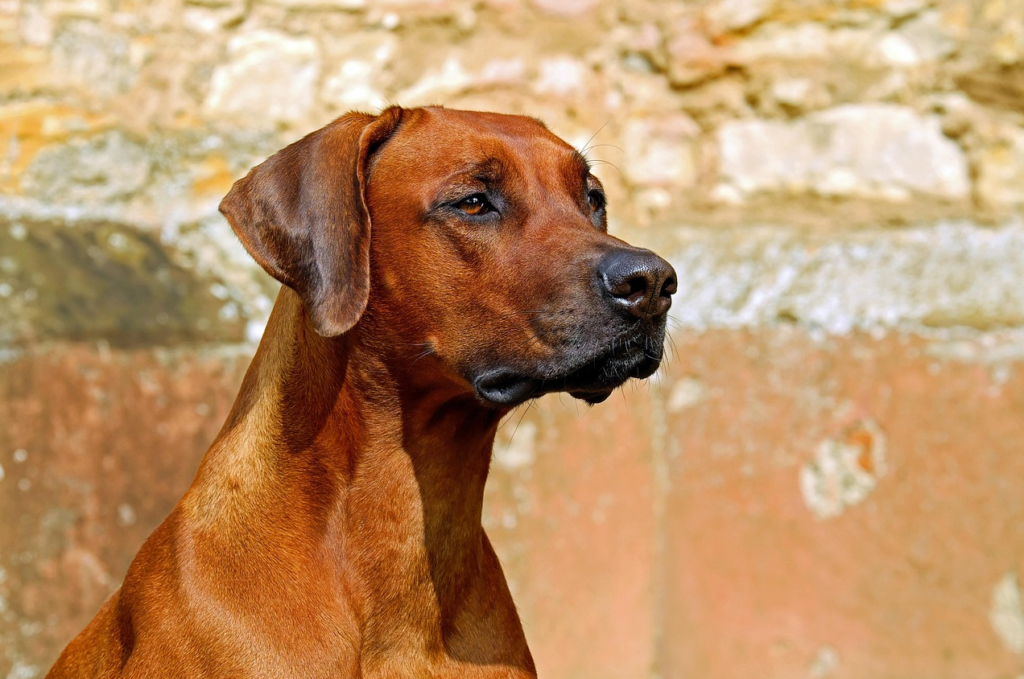
On the other side of the Atlantic, a team of six dogs—Leo, Siri, Suri, Käthe, Hilde, and Barni—are working for the German Federal Institute for Risk Assessment (BfR). Their task is decidedly less glamorous than medical detection, but equally vital: they are saving livestock from toxic weeds .
Spring ragwort (Senecio vernalis) contains pyrrolizidine alkaloids (PA), which cause severe liver damage in cattle and horses. If the plants get baled into hay, the animals can’t avoid eating them. Currently, there is no cheap, reliable method to screen massive hay bales for this contamination.
The BfR team trained their detection dogs to identify the scent of ragwort hidden among hay. In double-blind tests involving 419 samples, the dogs achieved 100% sensitivity and 88% specificity. When the ragwort was mixed directly into hay bales, the dogs still performed at 97% sensitivity .
The implications are huge. Instead of sending every hay bale to a lab, farmers and horse owners could eventually employ dogs for rapid, on-site risk assessment. It is a low-tech solution to a high-stakes toxicological problem.
Part V: The Subjects Strike Back – What Science Owes the Dog
Thus far, we have focused on what dogs do for science. But the relationship is reciprocal. In the last decade, a massive, global effort has emerged to return the favor: to use the power of big data and genomics to improve the lives of dogs themselves.
The Golden Retriever Lifetime Study
Now in its 14th year, the Golden Retriever Lifetime Study is one of the most ambitious veterinary medical projects in history. Sponsored by the Morris Animal Foundation, the study follows a cohort of over 3,000 Golden Retrievers from puppyhood through the end of their lives .
Goldens are beloved, but they are also cancer machines. They suffer from hemangiosarcoma, lymphoma, osteosarcoma, and mast cell tumors at rates that are heartbreaking for owners and puzzling for scientists. The goal of the study is to identify the environmental, nutritional, genetic, and behavioral risk factors for these diseases.
2025 was a banner year for the project. Among the major findings:
- Researchers identified the gene DENND1B, which is linked to greater body fat in both Golden Retrievers and Labradors. Interestingly, this same gene is associated with obesity in humans .
- A genome-wide analysis linked specific genetic regions to trainability, activity level, and fearfulness—traits that share genetic bases with human emotional and cognitive conditions .
- The study confirmed that household factors matter. Dogs from single-dog homes had higher odds of fear and poorer trainability. High-protein diets correlated with increased dog-dog rivalry, while low-protein diets correlated with separation anxiety .
Perhaps most importantly, the study is building a “biological aging clock.” By analyzing blood counts and biochemistry as the dogs age, researchers can now predict mortality risk in canines, providing a model for aging research in humans .
The 2025 Canine Health Discovery Awards
In October 2025, the AKC Canine Health Foundation announced the semi-finalists for their inaugural Canine Health Discovery of the Year Award. The list of eight finalists reads like a roadmap for the future of veterinary medicine .
- Cancer: Researchers at Cornell discovered that Trametinib, an existing human cancer drug, can shrink aggressive oral tumors in dogs. Simultaneously, a team at the University of Illinois proved that injecting immune-boosting proteins directly into tumors (intratumoral cytokine therapy) is effective against solid tumors in dogs and has already prompted human clinical trials .
- Genetics: Auburn University identified a specific gene variant linked to intervertebral disc disease in Dachshunds. Breeders can now select for fewer copies of the risk variant, potentially reducing the incidence of paralysis in the breed .
- Metabolic Disease: Tufts University discovered abnormal fatty molecules in the urine of dogs with diet-associated dilated cardiomyopathy (DCM), offering a potential diagnostic biomarker for this mysterious heart condition .
- Heatstroke Prevention: In a wonderfully simple study, the University of Pennsylvania proved that the most effective way for an overheated dog to cool down is to dunk its head in water. More importantly, they demonstrated that dogs could be trained to voluntarily perform this action—a life-saving skill for working dogs .
Prenatal Genetics: A New Frontier
In a separate breakthrough published in August 2025, researchers successfully performed genetic profiling on canine fetuses using amniotic fluid collected during mid-pregnancy. By analyzing fetal fluids from breeds including Border Collies and Australian Shepherds, they identified genes related to coat color (MC1R), drug sensitivity (ABCB1/MDR1), and degenerative myelopathy (SOD1) before the puppies were even born .
This technology allows breeders to identify hereditary disorders in utero, enabling early interventions or informed management decisions. It is a direct translation of human prenatal diagnostic techniques to veterinary medicine.
Part VI: The Shelter-to-Scientist Pipeline
One of the most beautiful aspects of the modern “science dog” movement is its inherent sustainability and morality.
Heinrich, a legendary detection dog from the Working Dogs for Conservation program, was once described as “unmanageable.” He was a bundle of neurotic energy, the type of dog that would be returned to a shelter three times over. But when given a job—finding scat, tracing invasive species—Heinrich transformed. His obsession became an asset. His neurosis became focus .
Programs like Conservation Canines and Rogue Detection Teams actively recruit from shelters. They look for dogs that fail the “pet test.” These are dogs with high “prey drive” and low impulse control—dogs that would be miserable sitting on a couch but thrive when they are running 15 kilometers a day through the wilderness with their nose glued to the ground .
For these dogs, science isn’t a sacrifice; it’s salvation. They work until they are 8 or 9 years old, at which point they usually calm down enough to be adopted by their handlers. They spend their retirement lounging in backyards, having earned their rest by contributing to the preservation of the very wilderness they spent their careers exploring .
Part VII: The Science of Smell – A Deeper Dive
To truly appreciate the conservation dog, one must appreciate the physics of smell.
Dogs possess a specialized structure in their nasal cavity called the olfactory recess. Unlike humans, who breathe and smell through the same airway, dogs have a separate passageway for scent. When a dog exhales, the air exits through slits on the side of their nose, creating a vortex that actually pulls new odors into the nose. This allows dogs to sniff continuously for minutes on end without having to pause to breathe out .
Furthermore, dogs have a vomeronasal organ (Jacobson’s organ) that detects pheromones—chemical signals related to emotion and mating status. When a dog is “tasting the air,” they are literally pulling molecules into this specialized organ to analyze them.
This is why Jack, the whale-scat dog, could smell something floating on the water from a moving boat. He wasn’t waiting for the scent to come to him; he was actively vacuuming the air, separating the chemical signature of orca feces from the billions of other particles floating in the sea breeze.
Part VIII: Ethical Horizons – The Future of Canine Collaboration
As we look toward the future, the relationship between dogs and science is becoming more complex and, hopefully, more equitable.
The era of the Atomic Beagle is—mostly—behind us. While some regulatory toxicology testing still occurs in canines, the trend is firmly away from invasive terminal studies and toward observational, longitudinal studies like the Golden Retriever Lifetime Study. The emphasis has shifted from using dogs as disposable subjects to treating them as patients and partners.
However, this raises new ethical questions. When a shelter dog is recruited for conservation work, is it consent? Bolman argues that we must acknowledge the “blurred lines.” We have bred dogs for thousands of years to be dependent on us and eager to please. Their willingness to work is a genetic trap we have set. It is our responsibility, therefore, to ensure that their work is enriching, not exploitative .
The data suggests we are moving in the right direction. The “Beaglers” of the 1950s may have loved their dogs, but they still injected them with plutonium. The handlers of 2025, like Collette Yee, have a different relationship with their partners. Yee doesn’t just command Jack; she reads his nostrils. She follows his lead. She admits that without him, she wouldn’t be able to do her job .
This is the ultimate evolution of the human-dog bond: from master-servant, to caretaker-pet, to collaborator-collaborator.
Conclusion: The Bark of Progress
Dogs do their duty for science in ways both expected and astonishing.
They do it by standing on the bow of a boat, pointing their nose toward a horizon of waves, searching for a fleeting turd that holds the key to saving an ecosystem.
They do it by lying still in an MRI machine, or by allowing a veterinarian to draw their blood for the fifteenth time, contributing to a database that will save future generations of their kind from cancer.
They do it by pressing their nose against a vial containing a skin swab, signaling to a waiting researcher that, yes, this human has Parkinson’s, and yes, we can catch it earlier next time.
And they did it, decades ago, by breathing radioactive air in a sterile room in Utah, their bodies serving as silent witnesses to the dangers we had unleashed upon the world.
The dog’s nose is a biological marvel, honed by 30,000 years of evolution and partnership. But the true marvel is not the nose itself; it is how we have finally learned to listen to what it is telling us.
We used to ask dogs to sit, stay, and roll over. Now, we ask them to save the whales, cure cancer, and detoxify our food chain. They answer, as they always have, with wagging tails and unwavering loyalty.
Science gave dogs a lab coat. Dogs, in return, taught science how to play fetch with the truth.
Sources
Morris Animal Foundation: Golden Retriever Lifetime Study 2025 Outcomes
NPR: How a dog’s nose became a powerful tool for science and conservation
Springer: Unraveling canine genetic diversity (Mammal Research, 2025)
HealthDay: Dogs Can Sniff Out Parkinson’s Disease (2025)
Institute for Advanced Study: Atomic Beagles / Brad Bolman research
AKC Canine Health Foundation: 2025 Canine Health Discovery Award Semi-Finalists
German Federal Institute for Risk Assessment (BfR): Dogs detect toxic ragwort in hay (2025)
Scholastic: Conservation Canines, University of Washington