
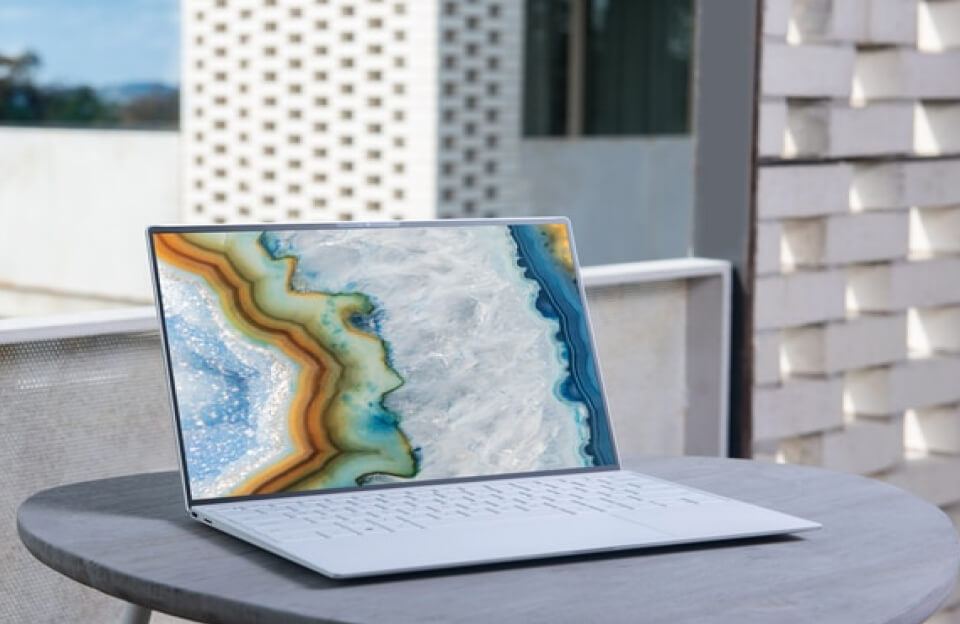
Excellent choice in focusing on the 2021 Dell XPS 13 with OLED—it was a landmark configuration that solidified the XPS 13’s place at the top of the ultrabook category. Here’s a breakdown of why that model was so special, its key specs, and important considerations.
The Headline: OLED Arrives on the XPS 13
The addition of a 3.5K (3456×2160) OLED display was the game-changer for the 2021 model (9310). While the XPS 13 was already renowned for its design, performance, and InfinityEdge display, the OLED option elevated the screen from “excellent” to “absolutely stunning.”
Why the OLED screen was a big deal:
- Perfect Blacks & Infinite Contrast: Each pixel is individually lit, turning off for true black. This makes movies, photos, and dark mode UI elements pop with incredible depth.
- Vibrant, Accurate Color: It covered 100% of the DCI-P3 color gamut, making it ideal for creative work and media consumption.
- HDR Capability: It supported Dolby Vision, bringing a high dynamic range experience to a laptop for more vivid highlights and shadows in supported content.
Key Specifications (2021 XPS 13 9310 OLED Model)
- Display: 13.4″ 3.5K (3456×2160) OLED touchscreen, 400 nits, 100% DCI-P3, Dolby Vision
- Processor: 11th Gen Intel Core i5 or i7 (Tiger Lake)
- Graphics: Integrated Intel Iris Xe
- RAM: 8GB or 16GB LPDDR4x (soldered)
- Storage: 256GB to 2TB PCIe NVMe SSD
- Design: CNC machined aluminum chassis, carbon fiber/composite palm rest, compact “InfinityEdge” bezels.
- Ports: The major compromise: Only 2x Thunderbolt 4 (USB-C) ports and a microSD slot/headphone jack. A USB-C to USB-A/HDMI adapter is essential for most.
- Battery: 52 Whr. Important Note: The OLED display consumes more power than the FHD+ non-touch option, so battery life is shorter (typically 6-8 hours of real use vs. 8-10+ on FHD).
Why It Was Considered “The Best”
- Unmatched Build Quality: Its aluminum and carbon fiber construction felt premium, rigid, and luxurious in a incredibly small and light form factor.
- The OLED Display: As discussed, it was arguably the best laptop screen in its class at the time for media and creativity.
- Performance: The 11th Gen Intel chips paired with Iris Xe graphics provided more than enough power for office work, browsing, light photo editing, and even casual gaming.
- Design Legacy: The near-borderless screen continued to impress, offering a 13.4″ display in an 11-inch laptop body.
Important Considerations & Drawbacks
- Battery Life Trade-off: You traded some battery longevity for that glorious OLED panel.
- Port Situation: The lack of USB-A and HDMI was a daily inconvenience for many, requiring a dongle.
- Webcam: The 720p webcam was mediocre, even for 2021 standards (later models greatly improved this).
- Upgradeability: RAM is soldered, and only the SSD is replaceable. Choose your configuration carefully at purchase.
Buying This Model in [Current Year] – Is It Still a Good Idea?
As a used/refurbished buy today, proceed with caution but it can be a great value.
Pros for buying now:
- Cost: You can find it at a significant discount compared to its original $1,500+ price.
- The OLED screen is still phenomenal and competitive.
- Build quality remains top-tier.
Cons and things to check:
- Generation Gap: It’s now 3+ years old. Newer models (2022+) have:
- 12th/13th/14th Gen Intel CPUs or AMD Ryzen options (much better performance/efficiency).
- 1080p webcams.
- Newer WiFi 6E/7.
- Battery Health: This is critical. A used laptop’s battery will have degraded. Ask for a battery health report (in Windows command prompt:
powercfg /batteryreport). Factor in a potential battery replacement cost (~$100-150). - Warranty: It is almost certainly out of the original warranty.
The Verdict
The 2021 Dell XPS 13 with OLED was a peak “luxury ultrabook” moment, combining best-in-class design with a breathtaking display. For a user who prioritizes media consumption, stunning screen quality, and portability above all else, and finds it in excellent refurbished condition at a steep discount, it can still be a fantastic machine.
However, for a primary, future-proof machine, a newer model (even a non-OLED XPS 13 from 2022 or later) or a competitor like the MacBook Air M2/M3 (for unmatched battery life and performance) or ASUS Zenbook S 13 OLED (a modern rival) might be a wiser long-term investment.



i only once tried oled and hollllyyyyy it was goooooddddddddddddddddddd
cant argue with this my man