
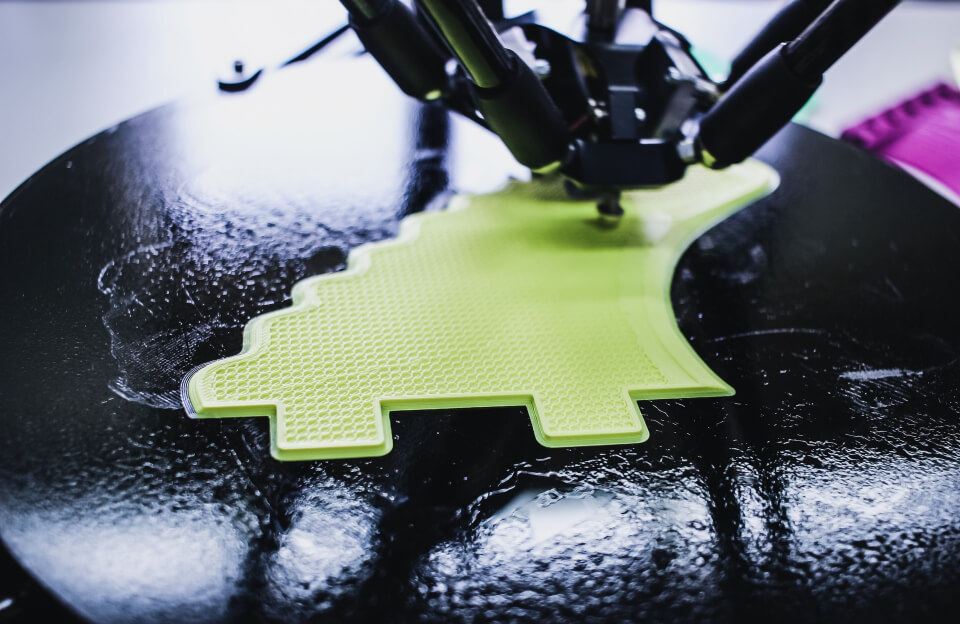
Broken Glass? Someday You Might 3D Print a New One
The Fragile Nature of Glass Meets the Promise of Additive Manufacturing
We’ve all experienced that moment of dismay—the accidental slip, the ceramic crash, the shattered glass on the kitchen floor. Whether it’s a cherished heirloom vase, a favorite coffee mug, or a crucial car headlight, breakage often means replacement, repair, or resignation. But emerging advances in additive manufacturing technology and materials science innovation are paving the way for a future where, instead of mourning the loss, you might simply 3D print a replacement glass object yourself. This isn’t science fiction; it’s the evolving reality of distributed manufacturing and on-demand fabrication.
The Current State of Glass 3D Printing: From Labs to Living Rooms
While plastic 3D printing has become commonplace—with affordable desktop 3D printers available to hobbyists and professionals alike—glass 3D printing has remained largely within research labs and industrial settings. The challenge is intrinsic: glass must be heated to over 1,000°C to become malleable, then carefully cooled to prevent internal stresses and cracking. Traditional fused deposition modeling (FDM), which layers molten plastic, isn’t directly transferable.
However, several pioneering techniques are breaking through these barriers:
- Direct Ink Writing (DIW) with Glass Suspensions: Researchers have developed photopolymer resins infused with silica nanoparticles. After printing using a stereolithography (SLA) process, the object is placed in a high-temperature kiln. The polymer binder burns away, and the nanoparticles fuse into pure, transparent glass. This method allows for incredible geometric complexity but requires post-processing.
- Molten Glass Deposition: Inspired by ancient glassblowing, systems like MIT’s G3DP2 feature a thermally controlled print head that extrudes molten glass like honey, layer by layer. A heated build chamber keeps the structure warm, allowing for seamless fusion. This can produce strong, optically clear objects with the fluid aesthetics of blown glass.
- Laser Powder Bed Fusion: Fine glass powder is spread in thin layers and selectively fused by a high-powered laser. Similar to how metal is printed industrially, this can create robust, sintered glass components. While not always fully transparent, it’s excellent for functional parts like custom labware or specialized lenses.
These technologies are maturing rapidly. What was once a multi-million-dollar lab setup is being simplified and miniaturized. Companies are now developing desktop glass 3D printers aimed at designers, researchers, and eventually, consumers.
The Future Home: Your Personal Digital Glass Workshop
Envision a kitchen countertop appliance next to your coffee maker: a compact glass 3D printer. The scenario for repairing a broken glass might unfold like this:
- Scan: Using your smartphone’s LiDAR scanner or a simple photogrammetry app, you capture the broken pieces. Advanced software algorithms would analyze the scan, digitally reassemble the object, and identify the missing fragments.
- Design & Adapt: Perhaps you don’t want an exact replica. AI-assisted design software could suggest modifications—thickening a fragile stem, adding a personalized monogram, or even reinterpreting the design entirely. This shifts repair from replication to creative restoration.
- Print: You load a cartridge of recycled glass feedstock—pellets made from old bottles or even the broken pieces themselves (after crushing). Selecting a “crystal clear” or “frosted” finish, you start the print. The printer, with its enclosed, high-temperature chamber, works over several hours, building the replacement layer by microscopic layer.
- Finish: Depending on the technology, some annealing (controlled cooling) might be required in a small, integrated kiln compartment to relieve stresses. Finally, you remove a warm, solid, and perfectly fitting new component.
This paradigm moves us from a replacement economy to a repair and regeneration economy. It empowers consumer-level fabrication, democratizing access to creation and repair.
Transformative Implications: Beyond the Kitchen
The ability to 3D print glass on demand will ripple far beyond fixing a wine glass.
- Sustainable Manufacturing & Circular Economy: Localized production slashes the carbon footprint of logistics. Using post-consumer glass waste as feedstock closes the material loop, turning a broken item into the resource for its own replacement. This is a cornerstone of the circular economy model.
- Medical and Scientific Advancements: Labs could print customized lab-on-a-chip devices, unique bioreactors, or patient-specific implantable glass components (like bioactive glass for bone repair) overnight, accelerating research and personalized medicine.
- Architecture and Design: Architects could prototype and produce complex fenestration components, light-diffusing structures, or custom tiles with internal textures impossible to mold or blow traditionally. This enables a new era of mass customization in building materials.
- Art and Cultural Heritage: Museums and conservators could non-invasively replicate fragile artifacts for study or display, or print exact-fitting supports and fills for restoration work, blending cutting-edge tech with ancient preservation.
The Roadblocks on the Path to Transparency
Despite the exciting potential, significant technical challenges and market adoption barriers remain before glass 3D printing becomes ubiquitous.
- Cost and Accessibility: High-temperature systems are energy-intensive and require expensive, durable materials. Bringing the cost down to consumer-friendly levels is a major hurdle.
- Material Properties: Achieving the optical clarity, strength, and chemical resistance of commercially manufactured glass (like borosilicate or tempered glass) is an ongoing research focus. Printed glass can sometimes be prone to microscopic bubbles or light-scattering imperfections.
- Speed and Scale: Printing is slow. Creating a simple drinking glass could take hours, compared to seconds in a conventional factory. Scaling up for larger objects presents even greater engineering challenges.
- Safety and Usability: A device that heats material to 1000°C requires serious safety protocols, thermal shielding, and failsafes to be a consumer product. The user experience must be as simple as loading a dishwasher.
The Broader Horizon: A Culture of Repair and Resilience
The true impact of on-demand glass fabrication is cultural as much as technological. It fosters a mindset of resourcefulness over disposability. It aligns with the growing Right to Repair movement, giving individuals agency over their possessions. In a world grappling with resource depletion and waste, the ability to locally source and create durable goods is a powerful form of resilience.
The “broken glass” becomes not an endpoint, but a beginning—a prompt for engagement with the material world. It invites us to understand the objects we use, to value longevity, and to participate in their lifecycle. While we may not have a desktop glass printer in every home by next year, the trajectory is clear. The fusion of advanced materials engineering, accessible digital design tools, and distributed manufacturing is steadily making the improbable possible.
Someday soon, the sound of shattering glass may be met not with a sigh, but with the quiet hum of a printer, beginning the work of making whole again.



3d printing is sure incredible cant wait too see what more it will bring