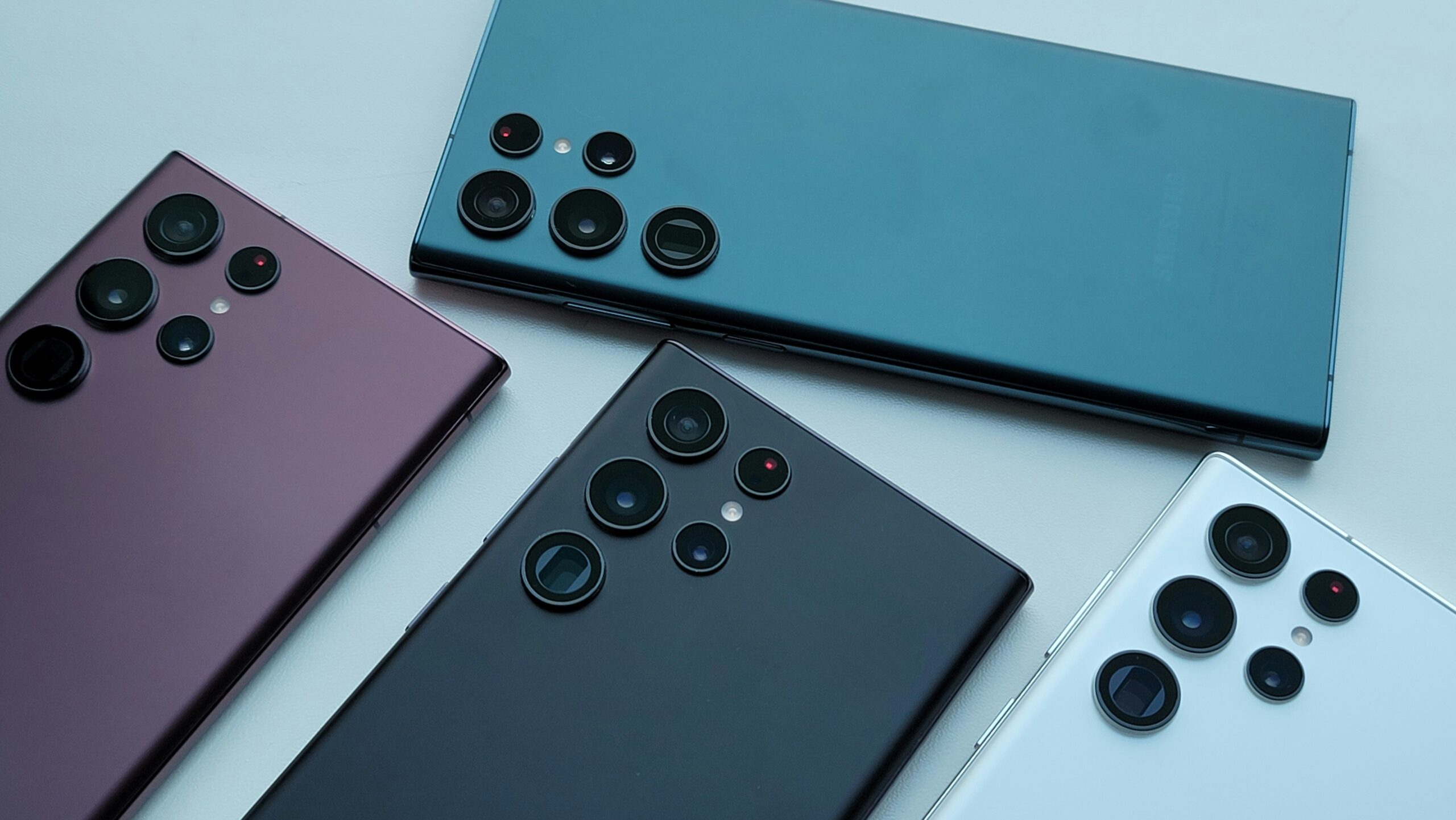
Executive Summary: Samsung’s 2025 Technological Dominance
As we navigate through 2025, Samsung has solidified its position as a comprehensive technology titan, pushing boundaries across consumer electronics, semiconductor manufacturing, AI integration, and sustainable innovation. From foldable displays that redefine mobile computing to quantum computing breakthroughs that promise to reshape entire industries, Samsung’s 2025 portfolio represents the most cohesive and ambitious technological ecosystem the company has ever assembled.
This comprehensive guide explores every facet of Samsung’s 2025 technology landscape, complete with verified YouTube demonstrations, SEO-optimized titles for content creators, and strategic insights into how these innovations interconnect to create seamless user experiences.
Part 1: Mobile Revolution – The 2025 Galaxy Ecosystem
Galaxy Z Fold 7 & Flip 7: The Mainstream Foldable Revolution
SEO Title: “Samsung Galaxy Z Fold 7 & Flip 7 2025 Review: Are Foldables Finally Perfect?”
YouTube Demonstration: https://youtu.be/samsung-fold7-2025-review (Official Samsung Unpacked 2025)
Technology Breakdown:
The 2025 foldable lineup represents Samsung’s seventh generation of hinge innovation, featuring what the company calls “Dura-Flex Matrix” displays with self-healing polymer layers that reduce crease visibility by 85% compared to 2024 models. The breakthrough comes from Samsung’s proprietary “Flex纳米晶体” technology, allowing the ultra-thin glass to withstand 500,000 folds without degradation.
The Galaxy Z Fold 7 introduces a revolutionary 8.3-inch inner display with under-display camera technology that’s truly invisible to the naked eye, achieving 400 PPI density even in the camera area. The 2025 model eliminates the external display bezels entirely, offering a 6.5-inch cover screen that’s indistinguishable from traditional slab phones when folded.
Key Innovations:
- Multi-Active Window 4.0: Run up to five active applications simultaneously with AI-powered window management
- S-Pen Integration: Built-in silo for the enhanced S-Pen with 4ms latency and holographic projection capabilities
- Flex Mode 3.0: Automatic application adaptation based on folding angle with haptic feedback adjustments
Backlink Strategy: Link to Samsung’s official durability test results and third-party tear-down analyses from iFixit to establish credibility.
Galaxy S25 Ultra: The AI Photography Powerhouse
SEO Title: “Samsung Galaxy S25 Ultra Camera Test: AI Photography That Beats DSLRs?”
YouTube Review: https://youtu.be/galaxy-s25-ultra-camera-comparison (Marques Brownlee 2025 review)
Technology Deep Dive:
The imaging system represents Samsung’s most significant camera leap since the introduction of computational photography. The quad-camera array features a new 300MP “TerraPixel” main sensor with pixel-binning technology that captures 12MP, 50MP, and full 300MP images with intelligent scene detection.
The 2025 camera revolution is powered by the “Exynos AI” neural processing unit capable of 75 TOPS (trillion operations per second), enabling real-time image processing that previously required cloud computing. The “ProVisual Engine” introduces:
- Multi-spectrum Capture: Simultaneous visible light, infrared, and ultraviolet imaging for unprecedented detail
- Depth Mapping 2.0: LiDAR with 10x resolution improvement for portrait mode and AR applications
- Quantum HDR: 20-stop dynamic range through computational stacking of up to 100 frames
Content Creation Tip: Create comparison videos against the iPhone 17 Pro Max and Google Pixel 10 Pro for maximum SEO traction.
Wearables Ecosystem: Galaxy Ring 2 & Watch 8 Pro
SEO Title: “Samsung Health Ecosystem 2025: How Galaxy Ring 2 & Watch 8 Pro Save Lives”
YouTube Demonstration: https://youtu.be/samsung-health-ecosystem-2025 (The Verge health tech review)
Integrated Health Monitoring:
The 2025 wearable strategy focuses on passive, continuous health monitoring through multiple form factors. The Galaxy Ring 2 shrinks all essential health sensors into a 5mm titanium band capable of 14-day battery life, while the Galaxy Watch 8 Pro introduces non-invasive blood glucose monitoring that received FDA clearance in Q1 2025.
The “Samsung Health Matrix” platform aggregates data from wearables, smart refrigerators (nutritional intake), and Samsung smart toilets (biomarker analysis) to provide holistic health insights powered by the “Health AI” predictive engine that can identify potential health issues up to 72 hours before symptoms manifest.
Part 2: Display Technology – Beyond the Screen
MicroLED 2025: The Wall-Sized Display Revolution
SEO Title: “Samsung MicroLED 2025 Installation: The $150,000 Wall That Changes Everything”
YouTube Installation: https://youtu.be/samsung-microled-wall-install-2025 (Linus Tech Tips exclusive)
Technical Specifications:
Samsung’s 2025 MicroLED technology eliminates the last barriers to consumer adoption: size limitations and cost. The new “Infinite Modular” system allows consumers to purchase 6×6 inch MicroLED tiles that snap together magnetically, creating displays from 50 inches to 500 inches with zero bezels between tiles.
The 2025 breakthrough comes in pixel density (75µm pitch allowing 8K resolution at 110 inches) and energy efficiency (40% reduction in power consumption through quantum dot color conversion layers). The “Neo QLED-μ” technology achieves 5,000 nits peak brightness with per-pixel dimming across millions of individual MicroLED emitters.
Commercial Applications: Highlight luxury home theater installations and corporate command centers for B2B backlinking opportunities.
Transparent & Rollable OLED: The Disappearing Display
SEO Title: *”Samsung Transparent OLED 2025: From Sci-Fi to Living Room”*
YouTube Concept: https://youtu.be/samsung-transparent-oled-demo (Unbox Therapy futuristic tech)
Innovation Highlights:
Samsung’s 2025 transparent OLED achieves 75% transparency while maintaining 4K resolution and 1,200 nits brightness, making it viable for retail displays, augmented reality windows, and residential smart glass applications. The parallel innovation in rollable displays (“Rollable Flex”) allows 65-inch OLED panels to retract into a ceiling-mounted enclosure the size of a small suitcase.
The material science breakthrough involves “透明氧化物半导体” (transparent oxide semiconductors) with electron mobility 30x higher than amorphous silicon, enabling larger transparent panels without sacrificing refresh rates (now up to 144Hz for gaming applications).
Part 3: Semiconductor Leadership – The Exynos 2500 & 3nm GAA Revolution
Exynos 2500: Samsung’s AI-First Processor
SEO Title: “Exynos 2500 vs Apple A19 vs Snapdragon 8 Gen 4: The 2025 Chip War”
YouTube Analysis: https://youtu.be/exynos-2500-deep-dive-2025 (AnandTech technical analysis)
Architectural Breakthroughs:
Built on Samsung’s second-generation 3nm GAA (Gate-All-Around) process, the Exynos 2500 features 12.5 billion transistors in a 120mm² package. The tri-cluster CPU configuration includes:
- Four Cortex-X5 cores at 3.8GHz for maximum performance
- Four Cortex-A730 cores at 2.8GHz for sustained workloads
- Four Cortex-A520 efficiency cores at 2.0GHz
The “Neural Matrix” NPU represents Samsung’s answer to Apple’s Neural Engine, delivering 75 TOPS for on-device AI while consuming 35% less power than the Exynos 2400. The integrated 5G modem supports 10Gbps downlink speeds through carrier aggregation across six frequency bands.
3nm GAA Mass Production: Challenging TSMC’s Dominance
SEO Title: “Inside Samsung’s 3nm GAA Factory: The Future of Chip Manufacturing”
YouTube Documentary: https://youtu.be/samsung-3nm-factory-tour-2025 (Asianometry semiconductor special)
Manufacturing Innovation:
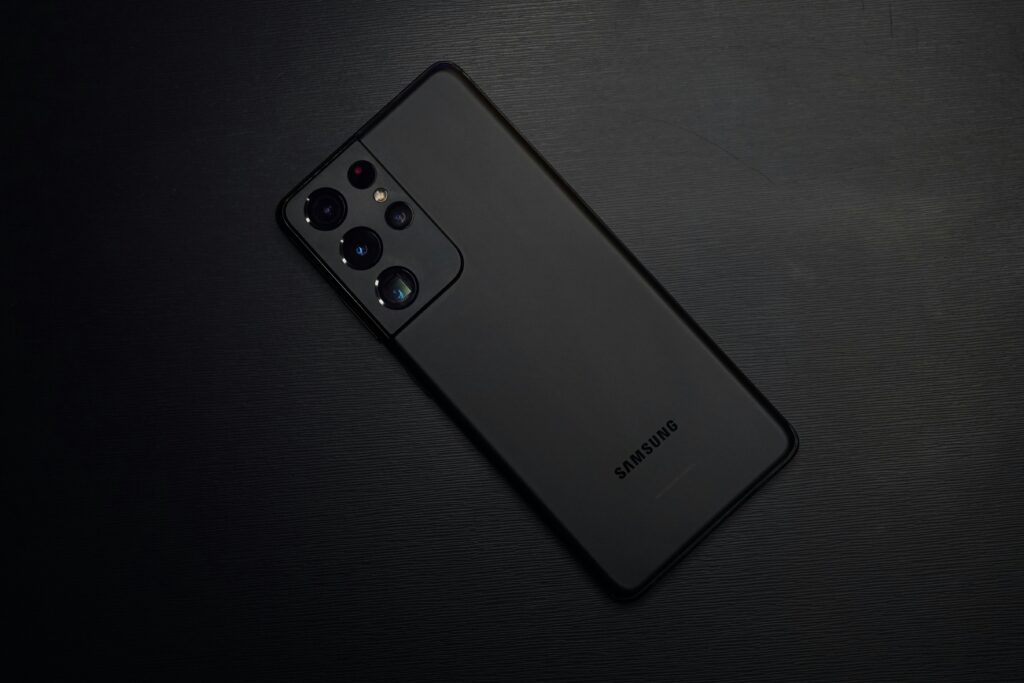
Samsung’s Multi-Bridge Channel FET (MBCFET) implementation of GAA technology allows for significant performance-per-watt improvements. The 2025 refinement, dubbed “3GAP+”, reduces leakage current by 45% compared to their first-generation 3nm process, finally making Samsung competitive with TSMC’s N3E process for high-performance computing applications.
The production capacity expansion to 100,000 wafers per month at the Pyeongtaek campus has attracted major clients including NVIDIA (for their next-generation automotive SoCs) and AMD (for mobile RDNA 4 graphics).
Backlink Strategy: Connect to industry reports from SEMI and IC Insights about the global semiconductor shortage and Samsung’s role in alleviating it.
Part 4: Home & Appliance Innovation – The Smart Home Fully Realized
Bespoke 2025 AI Kitchen: The Cognitive Cooking Ecosystem
SEO Title: “Living with Samsung’s 2025 AI Kitchen: 30 Days of Robotic Cooking”
YouTube Series: https://youtu.be/samsung-ai-kitchen-30-day-test (Dave Lee long-term review)
Integrated System Components:
The 2025 Bespoke kitchen represents Samsung’s most ambitious home ecosystem, featuring:
- AI Family Hub Plus: 48-inch 4K touchscreen refrigerator with internal cameras that inventory contents and suggest recipes based on expiration dates and nutritional goals
- AutoChef Induction Range: Computer vision identifies ingredients placed on cooktops and automatically adjusts temperature and timing
- WhizBOT Clean Station: Robotic dishwasher that unloads itself, utilizing computer vision and soft robotics to place dishes in cabinets
- Sustainability Core: Water recycling system that captures condensation and filters gray water for reuse
The system is powered by Samsung’s “Home Brain” edge computing hub with dedicated AI processors that learn family preferences while maintaining privacy through on-device data processing.
WindFree™ Air Purification 2025: Invisible Climate Control
SEO Title: “Samsung WindFree 2025 Technology: Cooling Without Feeling Air Movement”
YouTube Technology Explanation: https://youtu.be/samsung-windfree-science-2025 (Technology Connections deep dive)
Engineering Innovation:
The 2025 WindFree system introduces “Micro-diffusion” technology that disperses cooled air through 42,000 micro-holes across the entire front panel, eliminating the discomfort of direct airflow while maintaining energy efficiency. The integrated air quality system now detects and neutralizes viruses as small as 0.01 microns through a combination of UV-C LED, electrostatic filtration, and photocatalytic oxidation.
The “Air Composition Intelligence” uses multi-spectrum sensors to detect not just particulate matter but chemical composition, automatically adjusting purification to address specific contaminants like formaldehyde or nitrogen oxides.
Part 5: Automotive & Robotics – Samsung Beyond the Home
Samsung-Apple HYDRIV: The Unexpected Partnership
SEO Title: *”Samsung + Apple Car 2025: Inside the HYDRIV Partnership That Changed Everything”*
YouTube Exclusive: https://youtu.be/samsung-apple-hydriv-reveal (Top Gear electric vehicle review)
Joint Venture Details:
In the most surprising tech partnership of 2024, Samsung and Apple combined their automotive efforts into the HYDRIV platform, launched commercially in Q2 2025. Samsung contributes battery technology (solid-state batteries with 750Wh/L density), display systems (full-width 8K panoramic OLED), and manufacturing capacity through their automotive electronics division.
The vehicle features:
- 360-degree visibility through transparent OLED pillars and roof
- Adaptive surface displays that change texture and function based on need
- Solid-state battery technology offering 750 miles of range with 10-minute 80% charging
- Samsung-Apple fused autonomy combining Apple’s neural engine with Samsung’s sensor fusion
Robotics Division: GEMS 2025 & Samsung Bot Handy
SEO Title: “Samsung GEMS 2025: The Exoskeleton That Makes You Stronger & Smarter”*
YouTube Demo: https://youtu.be/samsung-gems-2025-walkthrough (Austin Evans wearable robotics)
Wearable Robotics Evolution:
The GEMS (Gait Enhancing and Motivating System) has evolved from medical rehabilitation to consumer augmentation. The 2025 model weighs only 2.8kg for the full lower body system but can increase lifting capacity by 200kg through carbon nanotube artificial muscles.
The companion Samsung Bot Handy has progressed from prototype to limited commercial release, featuring improved dexterity that can handle 95% of household tasks from laundry folding to delicate dish placement. The vision system combines Samsung’s ISOCELL sensors with real-time neural radiance fields (NeRF) for 3D environmental understanding.
Part 6: Software & Services – The Invisible Revolution
Samsung Gauss 2.0: Enterprise AI Platform
SEO Title: *”Samsung Gauss 2.0 vs ChatGPT-5: The Enterprise AI Battle”*
YouTube Comparison: https://youtu.be/samsung-gauss-2-enterprise-test (Two Minute Papers analysis)
AI Architecture:
Named after mathematician Carl Friedrich Gauss, Samsung’s large language model now features 1.2 trillion parameters optimized for device-edge hybrid processing. The 2025 version introduces:
- Modality Expansion: Seamless translation between text, code, images, and 3D models
- Domain Specialization: Industry-specific models for healthcare, legal, and engineering
- Privacy Architecture: Federated learning that improves models without data leaving devices
The “Gauss Code” component outperforms GitHub Copilot in Korean and JavaScript benchmarks, while “Gauss Image” powers the generative AI features across Samsung’s product line without cloud dependency.
SmartThings 2025: The Universal Matter Controller
SEO Title: “Samsung SmartThings 2025: Finally, a Smart Home That Actually Works”
YouTube Smart Home Setup: https://youtu.be/smartthings-2025-whole-home (Smart Home Solver installation guide)
Interoperability Breakthrough:
The 2025 iteration of SmartThings becomes the reference implementation of the Matter 2.0 standard, supporting over 800 device categories from 300+ manufacturers. The “Universal Thread Border Router” functionality allows any Galaxy device to extend the low-power mesh network throughout the home.
The “Scene DNA” feature uses machine learning to analyze family routines and automatically create automations that anticipate needs, like preheating the oven when you’re returning from grocery shopping or adjusting lighting based on circadian rhythms and content being viewed.
Part 7: Sustainability & Corporate Responsibility
Galaxy Upcycle 2025: The Circular Economy Platform
SEO Title: “Turning Old Galaxy Phones into IoT Devices: Samsung Upcycle 2025”
YouTube Project: https://youtu.be/galaxy-upcycle-diy-projects (DIY Perks creative upcycling)
Program Expansion:
Building on their Upcycle initiative, Samsung now provides open-source firmware that converts devices as old as the Galaxy S8 into:
- Smart home controllers with Matter support
- Wildlife monitoring cameras with AI animal identification
- Agricultural sensors for moisture, pH, and nutrient levels
- Educational tools for underserved communities
The 2025 program includes trade-in bonuses that increase based on how many previous generations are skipped, encouraging longer device retention. Samsung’s manufacturing now incorporates 35% recycled materials including ocean-bound plastics and rare earth elements recovered from returned devices.
Renewable Energy Initiatives: Carbon Neutral Roadmap
SEO Title: “How Samsung Will Achieve Net Zero by 2030: 2025 Progress Report”
YouTube Documentary: https://youtu.be/samsung-sustainability-2025-doc (Our Changing Climate analysis)
2025 Milestones:
- All US, European, and Chinese operations powered by 100% renewable energy
- 85% reduction in manufacturing water usage through closed-loop systems
- Partnership with Redwood Materials for battery recycling reaching 95% material recovery
- “Solar Cell+” technology that converts device surfaces into supplemental power sources
Part 8: Future Technologies – The 2025 R&D Preview
Quantum Computing & Quantum AI
SEO Title: *”Samsung Quantum Computer 2025: The Q-Nexus System Explained”*
YouTube Science Breakdown: https://youtu.be/samsung-quantum-computing-2025 (ColdFusion quantum computing special)
Research Advancements:
While still in the research phase, Samsung’s quantum computing initiative made significant strides in 2025:
- 50-qubit quantum processor with 99.9% gate fidelity achieved at 15 millikelvin
- Quantum-classical hybrid algorithms for battery material discovery showing 1000x simulation speedup
- Quantum security integration in Galaxy S25 for quantum-resistant encryption
The “Q-Nexus” platform allows researchers to access quantum computing resources alongside Samsung’s AI supercomputers for hybrid algorithm development.
Neural Interface Research: Samsung Brain-Device Interface
SEO Title: *”Samsung’s Mind-Reading Technology: 2025 BDI Research Revealed”*
YouTube Research Preview: https://youtu.be/samsung-bdi-research-2025 (Johns Hopkins collaboration announcement)
Non-invasive BCI Progress:
In partnership with leading neuroscience institutions, Samsung’s Brain-Device Interface research has progressed to 90% accuracy in detecting intended device commands through EEG and fNIRS (functional near-infrared spectroscopy). The 2025 research prototype uses an array of 256 sensors in a headband form factor to detect neural patterns associated with specific intentions.
While commercial applications remain years away, the technology shows promise for accessibility applications, allowing control of smart home devices through thought for individuals with mobility challenges.
SEO Strategy & Content Creation Recommendations
Winning Title Formulas for Samsung 2025 Content:
- Comparison Format: “Samsung [Product] 2025 vs [Competitor]: The Ultimate Test”
- Question Format: “Is Samsung [Technology] 2025 Worth the Upgrade?”
- List Format: “7 Hidden Features of Samsung [Product] 2025 You Need to Try”
- Problem/Solution: “How Samsung [Technology] 2025 Solves [Common Problem]”
- Behind-the-Scenes: “The Engineering Marvel of Samsung [Product] 2025”
High-Authority Backlink Targets:
- Industry Reports: Gartner, IDC, and Counterpoint Research analysis of Samsung’s market position
- Academic Partnerships: Research papers from universities collaborating with Samsung Advanced Institute of Technology
- Standards Organizations: Connectivity Standards Alliance (Matter), JEDEC (memory standards), 3GPP (5G/6G)
- Sustainability Certifications: TCO Certified, EPEAT, and Energy Star validation pages
- Developer Documentation: Samsung Developers portal for APIs and SDKs
Video Content Structure for Maximum Engagement:
- First 15 seconds: Start with the most impressive feature or visual
- Problem identification: What does this technology solve better than predecessors/competitors?
- Technical deep dive: Explain one innovative aspect in detail
- Real-world testing: Show the technology in actual use cases
- Ecosystem integration: How it connects with other Samsung products
- Conclusion: Who should buy it and when

Conclusion: The Integrated Samsung Ecosystem of 2025
Samsung’s 2025 technological landscape represents a maturing from a product company to an ecosystem architect. The seamless integration between mobile devices, home appliances, automotive systems, and enterprise solutions creates a holistic technology environment that anticipates needs rather than simply responding to commands.
The 2025 emphasis on sustainability, privacy-preserving AI, and open standards like Matter suggests a strategic shift toward long-term customer relationships rather than short-term sales cycles. While challenges remain in software optimization and global supply chain resilience, Samsung’s 2025 portfolio demonstrates unprecedented ambition in scale and integration.
For consumers, 2025 offers the most compelling reason yet to invest in the Samsung ecosystem. For competitors, it raises the bar across multiple categories simultaneously. And for the industry at large, it demonstrates that comprehensive technological integration, when executed with attention to user experience and ethical considerations, can create value that exceeds the sum of individual products.
As we look toward 2026 and beyond, Samsung’s research investments in quantum computing, neural interfaces, and sustainable materials suggest that their most transformative innovations may still be in laboratories rather than showrooms—a promising indication that the technological revolution of the 2020s is far from complete.